AfricanMecca, Inc. -  Home Page
Are your stuck and need help, click on Customer Support Section. We will answer all your travel and tour questions
Check your reservation status, make payments or update your account details
Search for information on East Africa
Looking for a tour or want to customize a tour, click on Tour Finder
To view your what you added to your travel cart, click on View My Travel Cart. You can check out and submit your reservation from here too
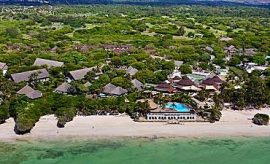
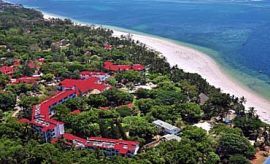
Indian Ocean Beach Vacations
Top 10 reasons to visit Kenya in Africa
Tell us about your African experience -
write a Kenya travel story or review

Jumba Ruins (Jumba La Mtwana), Kenya - Analysis, Facts And History

Jumba is a picturesque ruined village some 600 years old where, as you walk down to the sea, you can explore the remains of houses and mosques in a fine woodland setting. In addition to the manmade ruins you may see many interesting species of birds, butterflies and other insects. Let us straight away admit that Jumba is a puzzle. We have no historical records but we can be fairly certain from the excavation of the site by James Kirkman in 1972 that it was built about 1350 and abandoned about a century later. The full name Jumba la Mtwana means in Swahili "the large house of the slave" but because there is no written history of the place, we do not know whether this was its name 600 years ago. The one thing we can be absolutely certain about is that the inhabitants were Muslims; the ruined mosques are the evidence for this. A Muslim, often inaccurately written Moslem, is a follower of Islam; this is an Arabic word meaning 'the act of submitting' (i.e. to God).

The sealer of the monotheistic faith according to Islam was Muhammad, but in English it is so often written Mohamed or Mohammed that one should perhaps yield to convention. Muslims are sometimes called 'Mohammedans'; they prefer not to be, because of the implication that they worship Mohammed, which they do not.

The central belief of Muslims is:
"There are no Gods except God; and Muhammad is the Apostle of God." (La'ilaha illa'llah wa Muhammad Rasul Allah).

Islam began in the year 622AD when Mohammed moved from Mecca to Medina. This event is called "the Flight" or Hiira (sometimes written Hegira or Hidjira) and the Muslim calendar is calculated from 622 A.D. Mohammed died ten years later in 632 A.D. which in the Muslim calendar was 10 A.H. (Anno Hijrae the year of the flight). The Muslim year consists of 354 days, being based on twelve lunar months of 291/2 days each. This results in again of about one year in 33 over the Christian year of 365 days. The Muslim year 1400 A.H. began on 21st November 1979.

During your trip to Kenya for a safari, beach vacation or alternative adventure, a day historical or educational trip can be arranged.

Tell Me About The History of Jumba Ruins Located Between Mombasa and Malindi, Kenya?

Coastal History

There is little doubt that for the past 2000 years people from the Arabian Peninsula and from Persia (and perhaps also from India) have been sailing down the East African coast. In the 2nd century A.D. a book called the Periplus of the Erythrean Sea was written by an Alexandrine Greek as a guide to trade and navigation in these waters. The yearly pattern of winds on this coast resulted in some of the ships' crews having to spend the months October to April in East Africa. Having sailed from Arabia with the northeast monsoon (which blows from December to March) they had to be ready to return with the southeast wind, which blows from April to October. (North of the equator, this wind is deflected to become the southwest monsoon). If an Arab sailor missed the southeast winds he would be stranded for over half a year. The land is fertile and coastal life is attractive; a few months here would not be a hardship, especially if he were able to settle down with a local Bantu-speaking girl. In this way, the Swahili language must have grown up, the name itself coming from the Arabic 'sahl', plural 'sawahil' meaning 'coast' or 'shore'. Swahili is 80% Bantu, the language of the mothers, the children and the home, and 20% Arabic, the language of the fathers and of trade, filling the gaps where Bantu words were inadequate or lacking. Probably the Swahili language was already forming by 1000 A.D. or perhaps even by 622A.D. when Islam was launched in Arabia. The new faith must have been known in East Africa by 700 A.D.; but our earliest firm evidence on the coast is much later, 1107 A.D., which is the date for the foundation of a mosque in Zanzibar. Al-ldrisi, who wrote geography of the known world in 1154, said that there were no Muslim towns south of Barawa in Somalia; but he was an armchair geographer in Sicily and it seems that no one told him about Zanzibar.

Jumba Mosque Concept and Architecture

Most of the early Islamic building on this coast was done between 1350 and 1650. Spiritual life was very important to these coastal dwellers, and quite often the only structures in a village, which have survived, are a stone-built mosque and some tombs. Most people lived in mud and thatch; stone buildings were reserved for the spirit. This is not so true of larger settlements such as Gedi and Jumba, where sometimes the stone-built houses were more elaborate than the mosques. In its simplest form the mosque consists of a room with open doorways in the east and west, and perhaps also in the south walls. The early mosques evidently had no doors, which is an indication of the discipline of the society and the strength of its religion. In the middle of the north wall there is a recess or apse called the Mihrab. This has only one function; it indicates the direction of Mecca. Muslims are required to face Mecca when praying, which on the Kenya coast means that they must face north.

Larger mosques have side aisles and areas for washing. Some mosques were roofed with thatch and the root was supported on wooden pillars; but many were roofed with stone and therefore had to have substantial stone pillars. Inside the more important mosques, just to the right or east of the Mihrab there were sometimes three or four stone steps built against the wall. The imam (or leader of the prayers) stood on the top step to deliver his Friday sermon; where there is no sign of stone steps, this structure (known as the Minbar) was probably made of wood. Gedi Great Mosque has a stone Minbar and places such as Chundwa, Faza and Siyu have fine carved wooden ones. Apart from the Minbar there was no furniture inside the main hall of the mosque; worshippers sat on mats on the plastered floor, just as they do today. Muslims pray five times a day: before dawn, at noon, at about 4 pm, at sunset and after dark. In a few larger mosques the call to prayer is given nowadays from the top of a minaret which is a tower built as part of the mosque, but there is no sign of any minarets amongst the fallen masonry of the early mosques on the East African Coast. Sometimes there are the remains of steps up to the roof, as at Gedi, and the call would have been given from there. At small mosques it would simply have been given from a doorway.

Before praying, a Muslim must wash himself in a ritual manner. Most mosques therefore have a well, nearby, and sometimes water channel to lead the water into a cistern (as at the Mosque of the Long Conduit at Gedi). The cisterns were massive rectangular structures, nearly a meter deep; the corners were strengthened against leakage by the addition of internal quarter round pilasters (as In most of the cisterns at Jumba). The floors were usually plastered but some cisterns were floored with rectangular slabs of coral. Sometimes round bosses of coral were set in the ground beside the cistern. These were used to dry the feet and to rub off the rough skin, which is necessary if you go bare-footed because the skin on the heels grows hard and thick and then cracks. Just as sandpaper comes in different grades, so there was a need for different grades of roughness; for the fine grain they used Porites coral, for medium Favites and Goniapora and for coarse grain Platygyra or brain coral. Foot rubbers of all these different sorts can be seen at the Mosque by the Sea at Jumba.

Although women nowadays seldom go to mosques on the East African Coast, this was not always the case, and it certainly does not seem to have been Mohammed's intention. The main reason for praying at home is a practical one; if they go out they have to lock up the house. Several early mosques have separate prayer areas and washing facilities which appear to have been set aside for women; the separate hall and washing facilities at the south end of the Mosque by the Sea at Jumba can be explained in this way, and the famous Kongo mosque at Diani also has a hall at the south end which must have been for women.

Jumba Building Materials

Coral is a tiny sea animal; it does not swim around but makes itself a limestone 'shell' piled on top of the shells of its dead forbears. Millions of these little jelly-like animals live in colonies and the 'shells' form a calcium carbonate or limestone rock.

The early builders used to quarry the Porites coral lumps from the sea and cut the rock (while it was still fresh, because it hardens on drying) to make the ornamental details in their buildings. But for their main building stone, they would use the coral reef. This is basically limestone as well, but it is formed from bits of coral, shell and sand and all sorts of marine detritus, all cemented together with calcium carbonate to form a solid limestone rock, sometimes called coral rag. This type of rock is excellent for building because it is both light (because it is porous) and strong.

And it has another advantage: the broken bits and pieces can be burnt for making lime which is used as plaster and as a mortar for building. Lime improves in quality if it is stored out of doors for some years before it is used: rainwater matures it so that it makes a stronger plaster, and this effect can also be achieved if it is stored in a tank of water. In the past it was common practice among Swahili people to begin burning lime at the birth of a daughter so that it would be perfect for building a house when she reached the age of marriage. For the finest plasterwork, burning seashells made lime. Timber was used mainly for roofing. The most commonly used types were mangrove poles and sawn joists of Mwangati (Terminalia brevipes), a local forest tree.

Jumba Building Methods

The early coastal builders did not bother much about foundations; their walls were thick enough to provide a good base, so it was usually just a matter of clearing the ground and putting down a layer of broken stone in a shallow ditch. The building stone-used was untrimmed (random rubble), and it was derived from coral reef rather than from coral itself. The stones were held together with plenty of lime mortar. Quite often, walls were built up to a certain height, perhaps a meter, and then leveled off and left for a year or two. Besides being less of a strain on the builders, this was sound practice because exposure to rain hardens the limestone. When the walls had reached shoulder height, scaffolding was constructed on the outer side of the building for the higher work. Holes for the horizontal poles were often left in the walls and not filled in, so that they were ready when repairs had to be done (these holes and a building level where there was a pause in the work, can be seen outside the west wall of the Mosque by the Sea). Mihrabs, doorways, niches and other features were edged with frames of sawn coral blocks, made from the fine-grained Porites coral. These blocks were cut with corners about 50 less than a right angle, which brings the carving into sharper relief. The cut coral was covered with a thin layer of white plaster (as in the Mihrab of the Mosque by the Sea).

Doorways were always arched; they were with one odd exception never built in the European way with a keystone in the center to "lock" the arch; the apex of the arch was formed from two pieces of sawn coral with their vertical faces butted against each other. Sometimes the lower end of this joint had the corners rounded, thus giving a slightly 'S' shape to each side of the top of the arch. The doorsill was often made with a wooden beam, but only the slits on either side now show where these sills were housed. A wooden "reliever" beam often took the weight of the masonry above the doorway. Doorways frequently had niches (Swahili: Vidaka) on either side, perhaps for a copy of the Quran or for pottery lamps in which some vegetable oil would have been burnt. It is believed that castor oil was preferred for lamps because it burns with a smokeless flame.

The floors of rooms were finished with a layer of lime plaster. Very often a small drainage hole was made in the middle of the floor and this allowed wastewater to run into a large soak-pit beneath the floor. The soak-pits were built with a strong stone vault so that the floor did not cave in (see House of the Kitchen reference below), and the drainage holes were closed with plugs made of pottery or coral. It is probable that rooms were cooled by flooding them with water, which was drained away before the heat of the day. Soak-pits and latrine pits curved inwards towards the top, which distinguishes them from wells.

Roofs of the better quality buildings were made with sawn timber beams laid across the rooms from wall to wall. The size of the available timber governed the width of the rooms which was usually about 2.50 m. Small rectangular slabs of coral about 6 cm thick were laid on these beams, and on top of this surface there was a layer of lime concrete up to 50 cm thick. This sort of roof probably kept the rain out, but it was immensely heavy and was bound to collapse sooner rather than later. The large lump of masonry on the ground, near House No. 7 on the plan, at the top of the modern curved steps leading down to the Mosque by the Sea, has done just this. It is lying upside down, and the rectangular slots for the beams (12 x 5 cm) can be seen and also the small coral slabs (up to 31 x 17 cm) still held together by the lime concrete. The rough underside of the slabs would have been finished with a thick layer of white plaster, and the beams were probably painted red, white and black.

The top of the roof was plastered and sloped to carry off rainwater; the water was carried clear of the walls by heavy channels or spouts cut from single blocks of coral. One of these water channels can be seen amongst the stones at the north end of the Mosque by the Sea. A few mosques were roofed with domes and barrel vaults. A fine example of this type of roof can be seen in the Kongo Mosque at Diani.

A barrel vault is a sort of half cylinder or extended arch, usually 3 to 5 meters long. The anteroom on the east side of the mosque (No. 5 on the plan) was probably roofed with one or more barrel vaults, which would explain the high semi-circular wall at the north end of this room. The advantage of building domed and vaulted roofs was that they did not depend upon timber and were therefore likely to last longer than flat roofs.

Detailed Descriptions Of The Main Buildings At Jumba Ruins.

The ruins at Jumba include the remains of about eight houses and three mosques; three of the houses and two of the mosques have been selected for detailed description in order to explain the main features of these coastal buildings. In addition the tomb with the Arabic inscription is also described because it is the only written record, which has been found at Jumba. The buildings described are:

The Mosque by the Sea Number 8 on the Plan
The Tomb with an inscription Number 9 on the Plan
The House of the Many Doors Number 3 on the Plan
The House of the Cylinders - Number 1 on the Plan
The House of the Kitchen Number 2 on the Plan
The Small Mosque and the Big Well Number 14 on the Plan

Follow the main footpath from the ticket office towards the beach will lead you to:

The Mosoue By The Sea (Number 8 on plan)

There are three old mosques within the area of Jumba Ruins; of these the best preserved is the Mosque by the Sea. Like all mosques on this coast it is aligned with the Mihrab to the north. The main hall of the mosque is large; it probably had a flat roof made of lime concrete and supported on six pillars, but there is now no sign of the stone bases for these pillars. The Mihrab is well preserved and has a simple but handsome cut coral surround.

This was once covered with a thin layer of fine white plaster and quite a lot of it has survived on the stonework. To the right of the Mihrab there is a complete arched doorway; there would have been three such doorways on either side of the main hall of the mosque. At the back of this hall there are two doorways, which have been blocked to chest level. The floored area extends beyond these doorways and it is possible that this was an area reserved for women. On either side of the main hall there are long anterooms; the one on the right (east) probably had a flat roof, which was supported on three substantial stone pillars. The bases of these pillars are still in position and this is one reason for thinking that the main hall was once roofed in the same way. Beyond this anteroom there is a cistern that was rebuilt in 1975 as a defense against the sea.

At the north end of the cistern there is a foot rubber of Porites coral. The anteroom to the left of the main hall shows no trace of pillars and it may have been roofed with a long barrel vault. This long room leads through a doorway beside a sloping sill into another series of four rooms. At the south end a narrow doorway leads to a large cistern with three foot-rubbers; this was probably the women's washing area. Cisterns were not used as baths in the European sense; water was too precious for that. A half coconut shell on a thin stick was used to ladle out the water, a method that is still in use where there is no piped water supply. At the west end of the cistern, there is a channel in the wall for water so that the cistern could be filled from outside without embarrassing the washers.

At the northwest end of this series of rooms there is a small but deep cistern that may have been for storing water. It was filled from the north side. A doorway beside this cistern leads out of the mosque to a very large cistern, beside which there are four more foot-rubbers, one of which has its top cut flat. The sections of wall, some standing, some fallen around the large cistern, are the remains of tombs. Outside the west wall of the mosque there is a line of holes at shoulder height; these were used to support the ends of horizontal scaffolding poles when the upper part of the wall was being built.

The Tomb With An Inscription (Number 9 On Plan)

Tombs were usually clustered around the northern ends of mosques. Fifteen meters to the north of the Mosque by the Sea there is an Arabic inscription set into a wall that faces the sea. This is part of the tomb of some important person. Above the inscription there are six recessed panels made with cut coral, which are typical of early tombs of about 1400. In later centuries the panels were made with plaster instead of cut coral. The inscription itself consists of a finely carved slab of coral. The surrounding text is from the Quran, Chapter 3 verse 185 and may be translated:

"Every soul shall taste death. You will simply be paid your wages in full on the Day of Resurrection. He who is removed from the fire and made to enter heaven, he it is who has won the victory. The earthly life is only delusion."

Commemorative tablets of this sort have also been found at Mnarani and Kurwitu (near Vipingo North Coast Mombasa, Kenya) - they must have been produced by some craftsman who was highly skilled in carving Arabic in stone; he left the central part of the stone blank to be filled in according to need. The text in the central part of this stone was not very well carved and the sea winds and rain have weathered it so that it can no longer be read. Beneath the panel there is a small opening so that one could look inside the tomb; the tomb must have had walls all round it, but it would not have been roofed.
Between the tomb and the mosque there is a wall with some rather strange swirling patterns on the plaster. This is certainly a result of weathering although it is not known why the patterns form the way they do; probably it is the migration of one of the constituents in the plaster, such as gypsum, to form lines which are resistant to weathering.

In front of the inscription there is part of a doorway and two flat-topped pedestals of coral of the sort associated with cisterns and latrines. There may once have been a house here; if this was so, a lot of the shoreline has been eroded away in 600 years. Perched on the rocky slope behind the tombs, you can see two halves of a massive cistern, evidently from some unidentified building above.

A short distance along the shore from the tomb there is a cool picnic site (Number 10 on the plan).

Going back along the main path from the beach to the ticket off ice, you will come to:

The House Of The Many Doors (Number 3 On Plan)

This house has undergone such radical alterations in floor levels and doorways that now, in its ruined condition, it is extremely difficult to understand what it was like in the past. It is best to look at the facade with its arched doorways from inside the house; you are then standing on the original floor level and you can see two blocked doorways, one in the center and one less distinct on the left. There is another one on the right but you have to walk around the house to see it. These doorways belong with the wall behind you up as far as the limit of the plastered surface. At this level there are holes for the ends of the beams, which supported the roof, or possibly a floor if there was an upper story. The square niches on either side of the central doorway belong to this period.

Then the roof fell in. Instead of clearing out the rubble they leveled it and made a new floor at waist height about a meter above the first one. The old arched doorways were completely blocked and two smart new doorways were made at the new floor level. These with their pairs of ornamental niches are best seen from outside the building. To give the rooms' sufficient height the walls then had to be built up but these extensions were not plastered on the inside. There are some doorways and niches at the back of the house from which the cut coral frames are missing and it is probable that these have been built into the two new ornamental doorways. The rooms at the back of the house were probably left not repaired at this time.

So far, not so bad! But if you try to unravel the story of the area in front of the doorway facade, you will find a single wide double wall at right angles to the facade, blocking doorways at both ends, and a blocked doorway leading straight into a lavatory that is at the earlier level. There is a row of round holes that have been made along the left side of the front of the doorway facade, just cutting across the arches of the upper doorways; these might have been made to take poles supporting some sort of lean-to roof, or they might have held pegs for hanging decorative matting or cloth. The latter explanation seems more probable as there is a very similar row of holes along the front of house number 13.

The large area in front of the doorway facade is divided by a wall into roughly square courtyards. In the western corner (lower left corner) there is a deep hole lined with stone. This was probably a deep drop latrine pit. The two large coral pedestals beside it were for crouching or sifting on when washing, and within easy reach of them there is a recess to hold a large water pot. Beside this there is a blocked doorway (already mentioned). Nearby is a pile of stones, which is actually the top of another latrine pit, but this one is at a-much -higher level. Probably the first pit collapsed and years later, when the area was filled up with rubble from fallen roofs, the second pit was dug and built up at the higher level.

In the eastern square courtyard (right side) there are two more pits; they must also have been latrines as they are not large enough or deep enough for wells. Beyond them in the eastern corner there is a small hole for a drain made with cut coral; this shows that the ground outside the house was once at least as low as the drain. The present ground level is the result of 600 years of deposition of rubbish, fallen masonry and decayed vegetable matter. Some 50 cm above this small drain the wall has been plastered and the two-quarter pilasters show that there was once a cistern inside the courtyard to store water. It is too high to have been connected with the small drain and must belong to a later period, when the floor level was higher.

In the two further corners of this court there were two large water storage pots. Beyond the two courtyards there are the remains of another group of rooms; parts of doorways with cut coral sides are still standing, showing that this was once a well built structure.
This house and the rooms beyond the courtyards, although originally built as an ordinary house, seem to have ended their useful lives divided into small apartments or lodgings; the courtyards, with their lavatories and large water pots, give the impression that these buildings were used to accommodate visitors, perhaps traders who needed to spend a few days or weeks in a foreign land.

The House Of The Kitchen (Number 3 on plan)

Just across the street from the House of the Many Doors, you find the House of the Kitchen.

The little of this house that has survived shows different levels, which are evidence of different periods of occupation. The most complete room with two round stone structures in it has been excavated to nearly a meter below its later occupation level. This can be seen from the north wall of the room where one side of a doorway and its sill are still in position, over half a meter above the original floor. The feature high up in the west wall was a double niche from which the cut coral surround has been removed and this also is so high that it must belong to the later period. The two round stone structures in the floor are the remains of soak-pits; formerly these drained a floor, which was at the later level indicated by the doorsill. (These two structures were previously thought to be ovens, hence the name of this house). Some blocking of doors has taken place in this room so that it now has no entrance at the lower level. A blocked doorway can be seen in the south wall between the two soak-pits.

Outside the soak-pit room on its north side there is a long raised passage almost at the level of the doorsill. At one end of this there is a latrine pit and the wall behind it is shaped to make a shallow alcove. Above the pit there are the remains of a well-made cut coral squatting place (similar to those at Gedi). In front of the pit there are two masonry pedestals to squat on when washing, after using the latrine. There is a second pit nearby which may have been another latrine.

The House Of The Cylinders (Number 1 on plan)

Just across the street from the House of the Many Doors, you find the House of the Kitchen.

This house is built on two different levels, which may represent different periods of occupation. You come into the house at the upper level from the east side. Just inside the doorway on the left there is the base of a large water pot. Most of the inside walls in this upper part of the house have fallen and been removed. Higher up on the wall opposite the entrance are two horizontal slots which once held the ends of wooden beams or wall plates. These beams rested on top of the dividing wall and would have supported the inner ends of the roof timbers. The main feature of this house is at he lower level, in the north-west (far right corner). Here there is a water cistern against which two short flat-topped coral pillars or pedestals have been built (from which the house was named).

Beside the cistern there is a deep drop latrine pit. The floor of this complex was tiled with coral slabs. This arrangement was probably a combined lavatory and bath place. The coral pedestals would have been used for squatting on to wash after using the latrine and there would have been a good supply of water when an all-over wash was needed. In the large room to the east of the wash-place, there is a hole for a drain beneath the doorway leading out of the house. It is difficult to explain this feature and its relationship to the doorway, but it is very similar to the drain in the House of the Many Doors. High up in the outside wall of this room there are two narrow vertical ventilation slits. This is an unusual feature. Usually there were no outside windows; neither draughts nor peeping toms were encouraged.


The Small Mosque And The Big Well (Number 14 On Plan)

In the southwest corner of the ruins area there is a small mosque. The Mihrab is rather decayed but still quite impressive. The hall of the mosque was just too large to be spanned by one set of beams so there must have been a single central pillar. A depression in the center of the floor shows where this once stood. The arched doorway on the east side is still standing. The structure of the arch shows the divided keystone. The slots at the level of the doorsill show that there was once a heavy wooden sill here. There is also a slot above the arch, which was for a wooden reliever beam, to take some of the weight of the masonry above the doorway. The small vertical window to the right (east) of the
Mihrab is a unique feature for which no parallels are known.

To the west of the mosque there was a room at a lower level; the doorway leading to the mosque has been partly blocked and this suggests that there was once an earlier mosque on this site at the same level as the room.

At the south end of the mosque there is a very fine well, which still contains good drinking water; it is 10.5 meters (35 ft) deep. One would expect to find a cistern between the well and the mosque; probably it exists below ground level in the area outside the south wall of the mosque, which has not been excavated.

Conclusion on Jumba Ruins, Kenya, Archaeology and Architecture

Since the years when the Roman legions were occupying Europe and Christianity was the latest topic of discussion in the Mediterranean, there have been sailors and merchants from Arabia trading along the east coast of Africa in search of ivory, hippopotamus teeth, rhinoceros horn, tortoise shell from the hawksbill turtle and ambergris from the sperm whale. Ivory was in great demand in India and tusks from African elephants were larger than those from India; for exchange, the traders brought cloth and metals. Gradually the economic links developed into human relationships; from these a new language was born, taking its name from the Arabic word for the coastlands where the people lived.

The earliest use of the word- “Swahili” is in Ibn Battuta's account of his travels. He stayed a night in Mombasa in 1331 and noted that the people were pious Muslims, that they all went barefoot, and that beside the mosques there were cisterns from which they drew water with a wooden vessel fixed to a thin stick one cubit long. The town of Jumba was founded within a few years of Ibn Battuta's visit and it, is not surprising to find that the ruins include three mosques and several cisterns. There can be no doubt that the people of Jumba were Muslims, and very probably they were Swahili speakers.

Jumba was only inhabited for three or four generations. The Chinese porcelain and other kinds of pottery excavated in the ruins show that the occupation lasted from about 1350 to 1450, but without any written history of the area these dates must not be regarded as very accurate. Although the houses were built of stone the structures were frequently altered and added to during this time to suit the social and economic needs of the moment. This seems to indicate a lively and flexible mental attitude, and it certainly suggests that labor was plentiful and needed to be kept busy.

The presence of Chinese porcelain at Jumba does not mean that the Chinese lived here or came here to trade, although a great Chinese fleet of 62 ships and 37,000 men did pay a diplomatic call at Malindi in 1417. Chinese porcelain was traded very extensively throughout the Indian Ocean. The earliest examples on the Kenya coast have been found at Manda in the Lamu region and are dated in the ninth century.

By 1350 the well-known Chinese blue and white porcelain was being made and exported. The porcelain must have passed through many hands before it reached the east coast of Africa. Canton, north of Hong Kong, was probably the port of shipment. We know little as yet about the pattern of the porcelain trade, but Portuguese records mention that there were three ships from Cambay, in north-west India, anchored in Mombasa harbor in 1505. By this time the trade in blue and white developed to an extraordinary degree; composite kilns built up hillsides were capable of producing 100,000 items in a single firing.

A century later, Dutch shipping records show that prodigious quantities of porcelain were being exported from China. The sharp contrast between the fertile Kenya coast and the arid lands to the north has resulted in a recurrent pattern of marauding and aggression. Coastal populations have been forced to retreat southwards and it is possible that Jumba was originally a refugee settlement. It has also been suggested that the people came from the old settlement of Mtwapa, which overlooks the creek a few kilometers away to the southwest, but there it no evidence for this. Probably the site of Jumba was selected because of the presence of fresh water. The beach is exposed to the northeast and southeast breezes, which would keep the people cool, but there is no harbor. Small boats could be beached but larger vessels would have to anchor a long way off shore, or more probably in Mtwapa creek, the merchandise being transported overland by porters. Many other coastal sites were similarly positioned with no proper anchorages for larger ships: Gedi, Malindi and Mambrui are examples.

Although the houses at Jumba are basically similar to other domestic buildings on the coast, they seem to have been frequently altered over the years and one gets the impression that by the end of the period of occupation they were providing accommodation for more than just the members of a family. Water storage and washing arrangements are often more in keeping with a small hostel; and it may be that merchants stayed here whilst waiting for a ship, or it might even have been an assembly point for people making the pilgrimage to Mecca. One can only guess at reasons for the desertion of the town; trade may have been interrupted. The Portuguese did not have any influence on the coast before 1500, so it is unlikely that they caused the decline of Jumba, although one must always remember that the terminal date of 1450 is no more than an approximation.

Other possible causes for the end of Jumba are disease, hostile invaders or a failure in the water supply. Whatever the cause of their departure, the people would have taken some of their belongings with them; whatever they left of value would soon have been looted, and the luckless archaeologist has to be content with the discarded fragments of their broken pots and pans.

Click Here For Jumba Ruins Price & Reservation

Have you been to Juma Ruins? If so, please submit your review

Tell a friend about Jumba Ruins